Impatience is a virtue
Christine Boyle takes over from Ravi Kahlon as BC housing minister

Last Thursday, there was a BC cabinet shuffle. Ravi Kahlon is taking the jobs and economic development portfolio (basically responding to Trump’s trade war), and Christine Boyle is taking over as housing minister.
I thought Ravi Kahlon did a great job as housing minister. I went back and looked at a post I wrote up in April 2023:
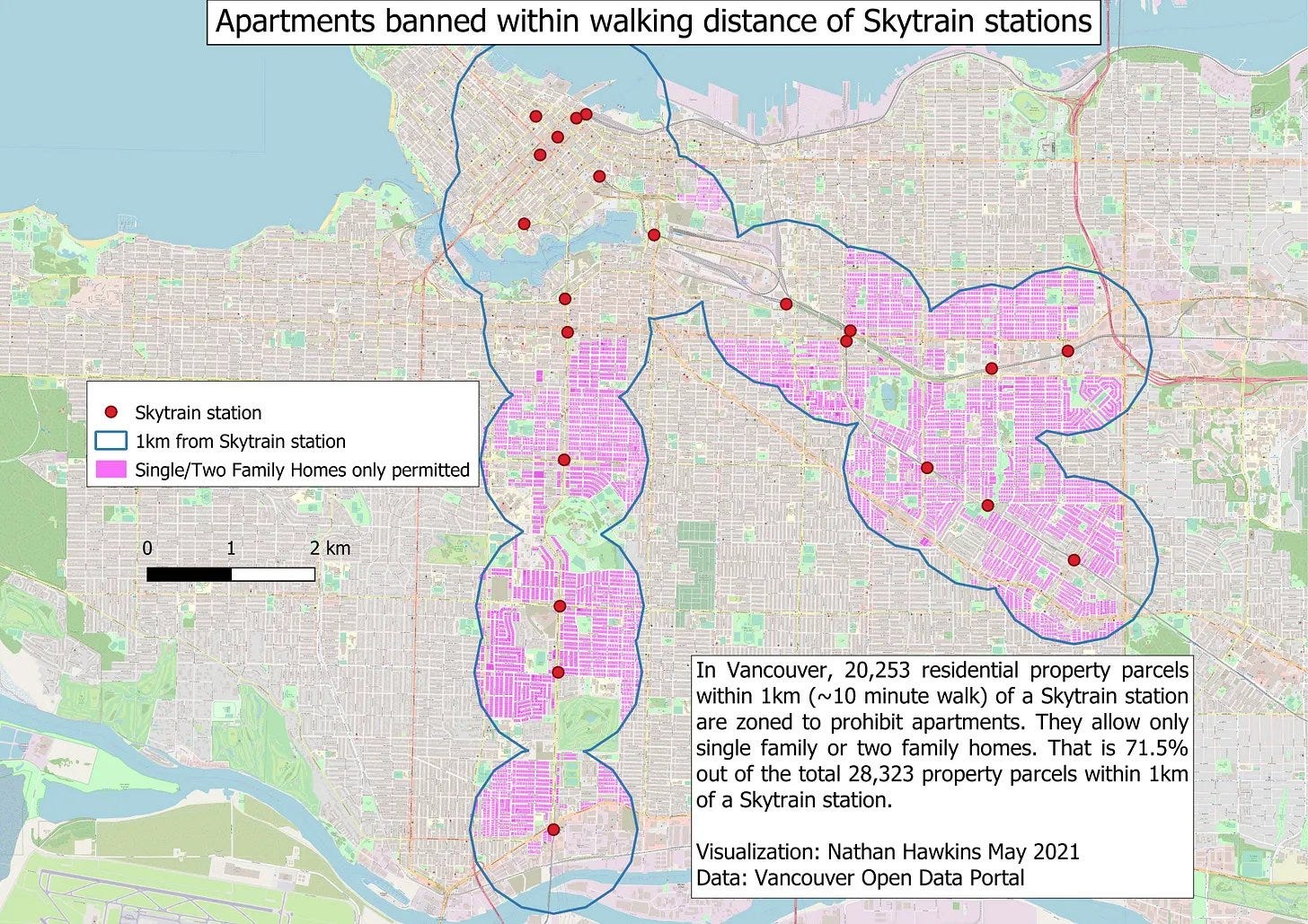
Kahlon sounds very open to upzoning within walking distance of rapid transit stations. (What I’d like to see: six storeys by right within 800 m of a rapid transit station, similar to what New Zealand did.)
The actual Transit-Oriented Area policy (passed in November 2023) went considerably further: eight storeys within 800m of SkyTrain stations, 12 storeys within 400m, 20 storeys within 200m. Upzoning to six or eight storeys near major bus exchanges.
Other major changes, in just the last two and a half years:
Allowing multiplexes province-wide (like a four- or six-unit townhouse complex on a single lot) - estimate is for 50,000 additional homes over five years, 200,000 over ten years.
A standardized catalog of multiplex designs
Requiring development charges to be fixed instead of negotiated
A program to acquire older, cheaper rental housing, to be operated by non-profits, so that it doesn't just get renovated for higher rents
More funding for student housing
Singapore-style BC Builds program for middle-income rental housing on government-owned land
Attainable Housing Initiative for home ownership at a 40% discount
Making it legal to build small single-stair buildings up to six storeys (like Seattle has allowed since 1977), instead of requiring a hotel-style layout
Renter protections - requiring landlord use to be 12 months instead of six months, requiring three months' notice instead of two months, faster RTB hearings
As a Vancouver city councillor (with OneCity), Christine Boyle was solidly pro-housing. She also put forward motions regarding land value capture (staff recommendation was to stick with the status quo), allowing social housing up to 12 storeys without rezoning (staff recommendation coming to council towards the end of the year), and allowing more housing in Shaughnessy (voted down).
I’m looking forward to seeing what she does next. To paraphrase the MacPhail Report, the key drivers of the housing shortage are that at the municipal level, we regulate new housing like it’s a nuclear power plant, and we tax it like it’s a gold mine. Municipal incentives are backwards: because housing is scarce and expensive, municipal governments can use revenue from development charges on new housing to keep property taxes low. They’re unlikely to move forward quickly without action by the provincial government: persuasion, compromise, and pressure.
Impatience
Someone on Reddit commented:
Politicians and their families do not care, they are insulated. They’re going about their days if there’s nothing wrong and that is what’s frustrating about all of this. They will never see reason until shit hits their front door.
In Ontario, maybe. In BC we're fortunate enough to have David Eby as premier. Unlike a lot of politicians I've talked to, he's impatient, and in the situation we're in, impatience is a virtue.
Kerry Gold interview with David Eby from January 2022, back when he was housing minister.
"I'm sure you can hear in my voice that my patience is really worn thin by some of the activities I'm seeing in various municipalities; turning down rental housing to frustrate BC Housing developments ... refusing to approve new rental units in a time of a housing crisis. I could run through many examples from across the province," Mr. Eby said.
He cited recent examples of rental projects that had been rejected in Surrey, Penticton and North Vancouver.
"I have my list of greatest hits, but it’s certainly not an exclusive list."
Kerry Gold knows a lot of housing skeptics.
Prof. John Rose, Kwantlen Polytechnic University human geographer, said before the province embarks on such a significant policy shift they should support it with data, such as they did for the foreign buyers' tax. He'd like to see evidence in numbers that regulation is thwarting affordable housing development.
"If you are going to make the argument that developers have been willing to sell affordable housing but are prevented from doing so by government regulations like zoning or NIMBY opposition, then doesn’t it make sense then to sort of measure that?" Prof. Rose says.
"These are changes they are proposing on a democracy front that are pretty significant, and also in terms of the real estate land market, are going to be very significant as well. I’m not fond of the statement 'extraordinary claims require extraordinary evidence.' They all do."
Andy Yan, director of the City Program at Simon Fraser University, agrees. Policy should be based on a clear problem statement, and we don't know what's causing the problem, he says. For example, it could be that municipalities are overwhelmed with development applications. Also, he says we shouldn’t conflate the urgent need for non-market housing with market housing.
"That's what's missing. You can't make assumptions that it's NIMBYism or the system that’s at fault. I'm not denying the urgency of the situation, but this is basic data they should already have on hand."
To that Mr. Eby responded: "Well, I'll be sure to mention that to all the people sleeping in their cars, and lining up to find rental units; that we are going to study the problem more."
"Well, I'll be sure to mention that to all the people sleeping in their cars, and lining up to find rental units; that we are going to study the problem more."
Glad to hear someone in authority 'gets it'. I've been gob-smacked by the number of 'progressive' friends who keep telling me that we need to put protection of heritage buildings, creating lots of parks, etc, ahead of providing enough housing for the people of Guelph. It infuriates me!