OneCity nomination - Russil Wvong
One of the biggest challenges facing Vancouver is that housing is maddeningly scarce and expensive. This is a solvable problem. People want to live and work here; other people want to build housing for them. The problem is, we don’t let them.
A short video from October 2024:

I’m planning to run for Vancouver city council in the October 2026 election. The first step is to win a nomination with OneCity, the one left-of-centre party that’s solidly pro-housing. OneCity has an open nomination race to decide who its candidates will be.
If you’d like to support my nomination campaign:
Sign up as a supporter - if you’re planning to support me, please let me know!
Join OneCity - so you can vote in the nomination race. The cutoff to sign up to vote in the mayoral nomination is January 11; I’m supporting William Azaroff. Annual membership dues are $10.
Become a OneCity donor - to build up OneCity’s campaign fund for the 2026 election, before the end of the year. Please email me, so I can thank you!
Who are you, and why do you want to run?
My name’s Russil Wvong. I’m a software developer. I also spend a lot of time reading and writing about housing in Vancouver, and what we should do about it. Basically, I think we should make it legal to build small apartment buildings across the city. I ran for Vancouver city council in 2022, on Kennedy Stewart’s slate.
I grew up here. What I really appreciate about Canada is that you have access to decent public education and healthcare regardless of whether your family is wealthy or not. But in Vancouver, housing isn’t like that at all. More than half of first-time homebuyers need help from parents. If your family doesn’t already own real estate in Vancouver, you’re going to find it really tough.
When housing is scarce and expensive, it’s worst for lower-income people. But it’s a terrible situation for everyone, including older homeowners. Where are our kids going to live? How’s the healthcare system supposed to work when younger people can’t afford to live here?
What’s particularly maddening is that this is a solvable problem. People want to live and work here. Other people want to build housing for them. But we don’t let them.
We have limited land, because of the ocean and the mountains. We can’t make more land, but there’s nothing physically stopping us from building more floor space. Elevators exist!
I think the main barrier is institutional. We created anti-growth institutions back in the 1970s that make it really difficult to get approval to build housing: “It’s easier to elect a pope.” The result is massive economies of scale from going as big as possible. So we end up with either super-expensive single-detached houses or high-rises, with not much in between.
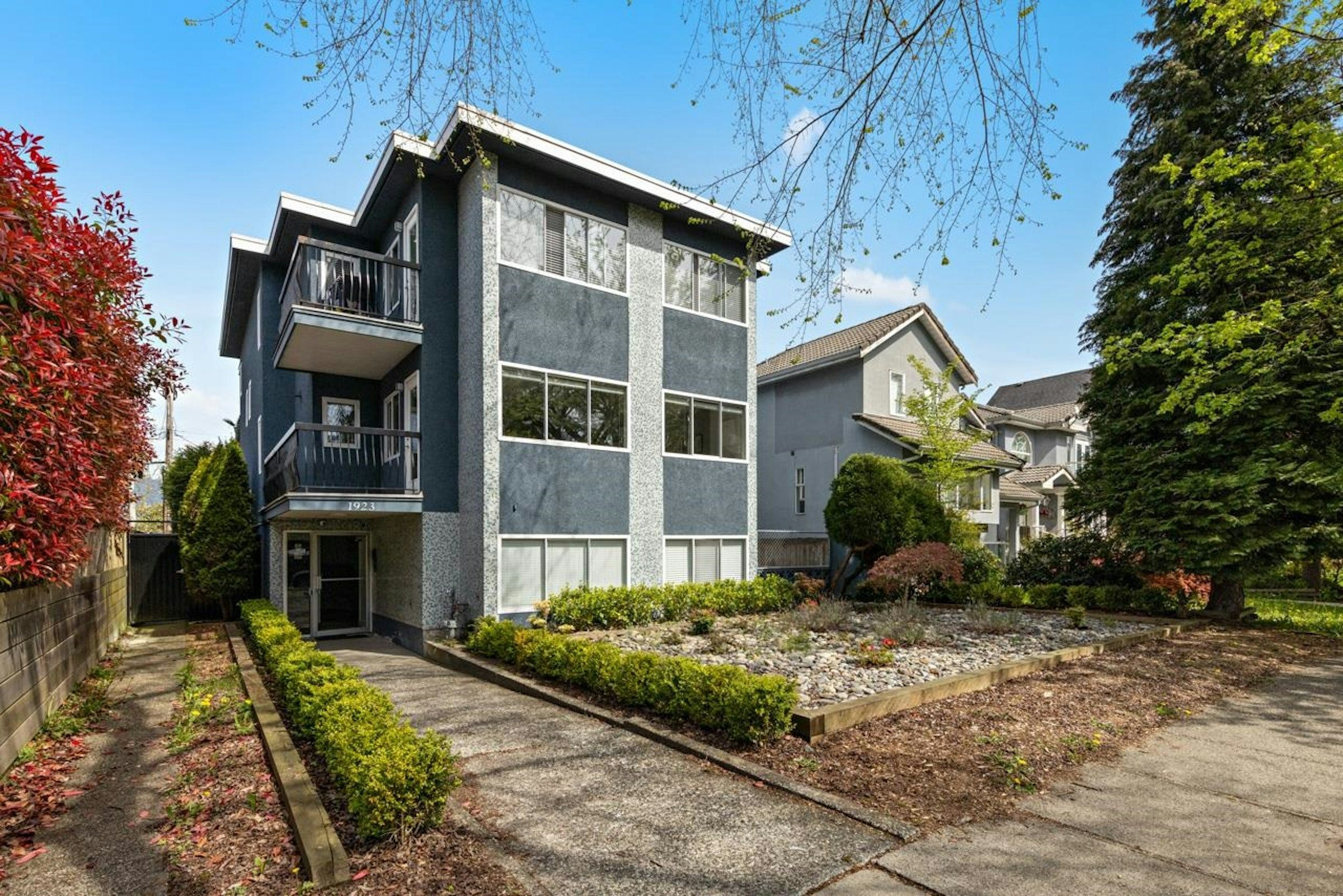
What we need to do is make it legal again to build small apartment buildings, instead of needing to get special permission. Small apartment buildings are much faster to plan and build, compared to high-rises. And the barriers to entry for small firms are lower - if you can build a single-detached house or a duplex, it’s not much harder to build a small apartment building. If we can bring down cost per square foot, we can build larger, family-size flats (where an apartment has the entire floor), like in Montreal, instead of increasing cost per square foot resulting in shrinkflation.
As Vancouver grows, we don’t just need housing. We also need amenities, like community centres and libraries. They’re particularly important for families with children, providing recreational activities when they’re not in school.
Because the issue is institutional, fixing it is going to require elected officials with the patience and persistence to learn how our existing institutions work, to set clear priorities, and to make effective changes in a large organization.
The municipal political parties
The primary axis in Vancouver municipal politics is left vs. right, but there’s also a “more housing” vs. “less housing” axis.
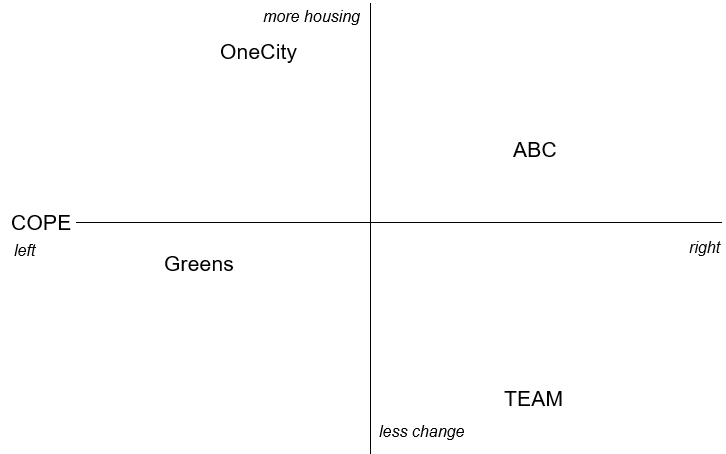
The municipal political parties are much less well known than the federal and provincial parties. OneCity is centre-left and pro-housing.
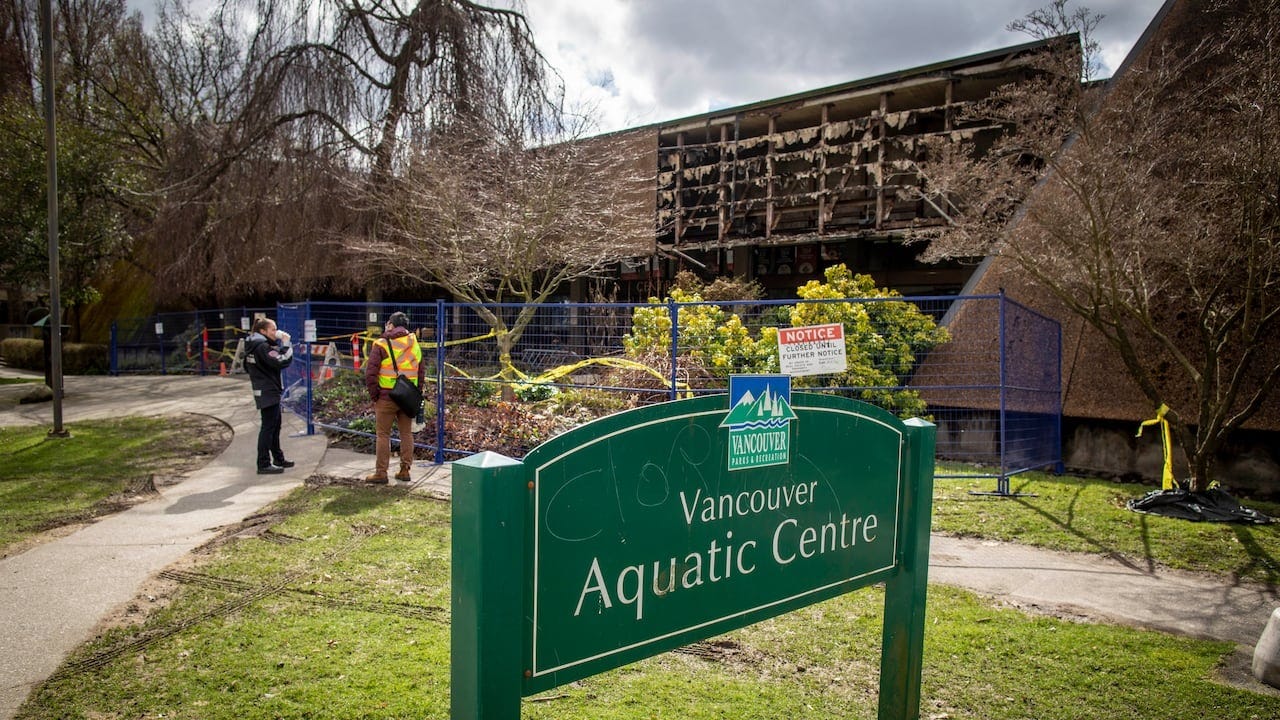
To be fair, ABC is also pro-housing, although closer to the status quo than OneCity. The biggest area where I disagree with ABC is Ken Sim’s plan to cut property taxes (“zero means zero”) when our community centres are falling apart, due to lack of funding for maintenance and repairs.