Six-storey wood-frame buildings
Faster and less risky to build

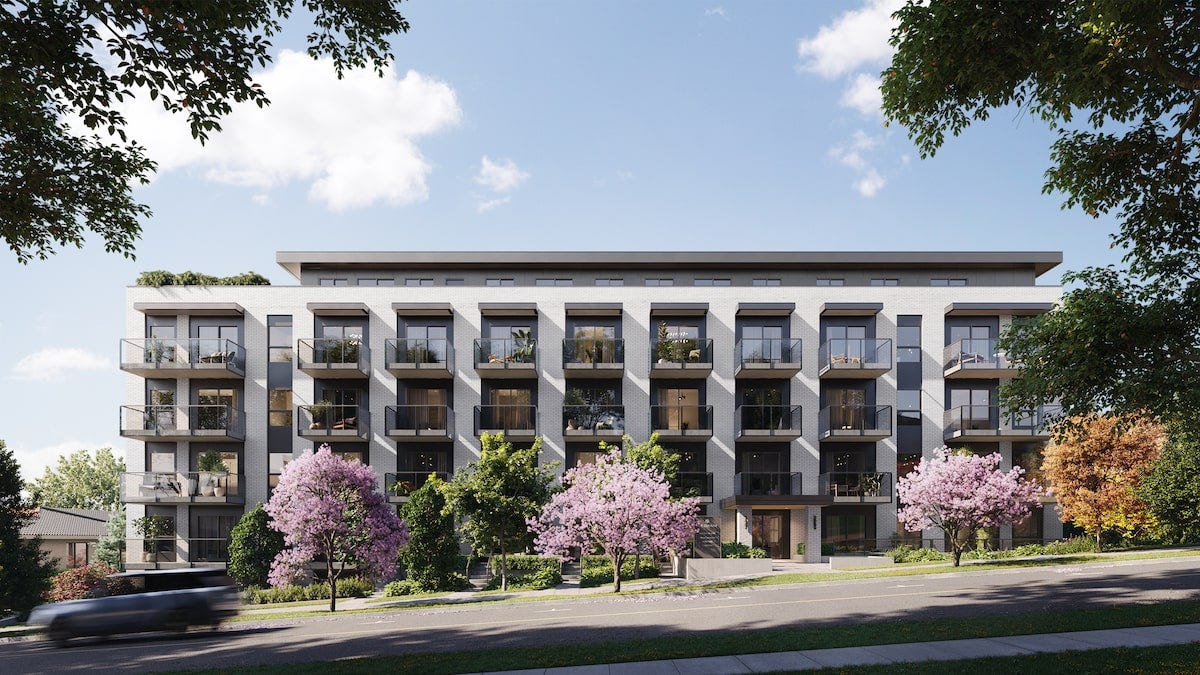
Developers embrace the big advantages to building small. Frances Bula, Globe and Mail, January 2026.
An article enumerating some of the advantages of six-storey wood-frame projects, compared to high-rise projects:
Construction costs are 10-15% lower compared to concrete.
They’re faster to plan and build.
They’re less financially risky.
They don’t require below-market rentals, cross-subsidized by the market rentals (“inclusionary zoning”). The cost of the cross-subsidy pushes up the minimum rent on the market side.
A couple additional advantages:
The barriers to entry are lower.
With single-stair design, it should be possible to build a small apartment building on a single lot, without having to do land assembly.
That said, high-rise projects do make sense at locations where demand is particularly high, like downtown and close to SkyTrain stations. Edward Glaeser, writing in 2011:
Building up is more costly, especially when elevators start getting involved. And erecting a skyscraper in New York City involves additional costs (site preparation, legal fees, a fancy architect) that can push the price even higher. But many of these are fixed costs that don’t increase with the height of the building. In fact, once you’ve reached the seventh floor or so, building up has its own economic logic, since those fixed costs can be spread over more apartments. Just as the cost of a big factory can be covered by a sufficiently large production run, the cost of site preparation and a hotshot architect can be covered by building up.
Previously:
Calgarians will remember the condos under construction (5-storey, effectively, some trick with walk-out "basements"...) across from the Stampede Grounds that all burned down when a guy put down a welding torch or something. I think there was even a fatality.
That's why the idea is considered dicey, I think, but I'm for it. These risks can be mitigated. Even with one staircase. Other countries do it.