Solidarity and sacrifice
Sharing the pain

My campaign website: russil.ca.
Upcoming events:
Thursday April 30 - council candidate debate, online. Registration link.
Sunday May 3, shortly after midnight - ballots sent by email to OneCity members as of April 10, from SimplyVoting. It’s a ranked ballot. Your first choice matters most, but if they don’t make it, your vote gets transferred to your next choice, and so on.
Sunday May 10 at midnight - deadline to submit your ballot.
Monday May 11 - results announced.
Solidarity and shared sacrifice
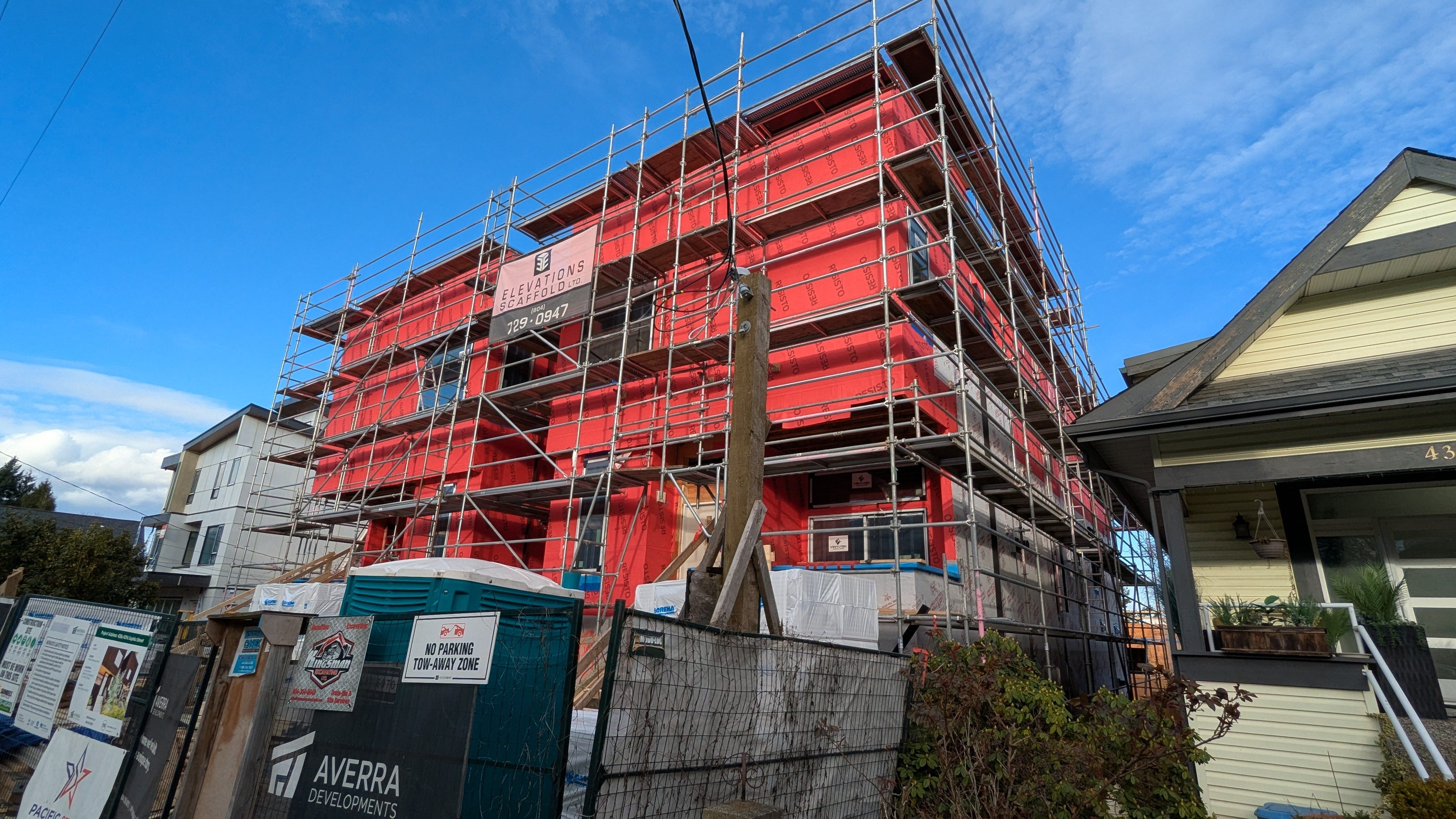
In tackling big challenges, I would emphasize the need for solidarity: the feeling that we’re all in this together, and we need to cooperate with each other. That’s how we got through Covid - younger people were willing to make sacrifices to protect older people.
We need to have the same feeling of solidarity as we move forward on tackling the housing shortage. This is in our own interest. As people retire from their jobs, we need to grow, so that younger people can move here to fill those jobs. We all depend on the healthcare system, for example. When younger people can’t afford to live here, the healthcare system will be under increasing strain.

There appears to be a growing consensus on allowing four- to six-storey buildings - people recognize that land is limited, and to fix the housing shortage, we need to build up. At the same time, it’s important to keep in mind that while they’re actually being built, people aren’t necessarily going to like it. When people’s neighbourhoods change, accepting that change is a form of sacrifice. (To quote Sonja Trauss: “Prohibiting new housing is a prized luxury amenity.”)
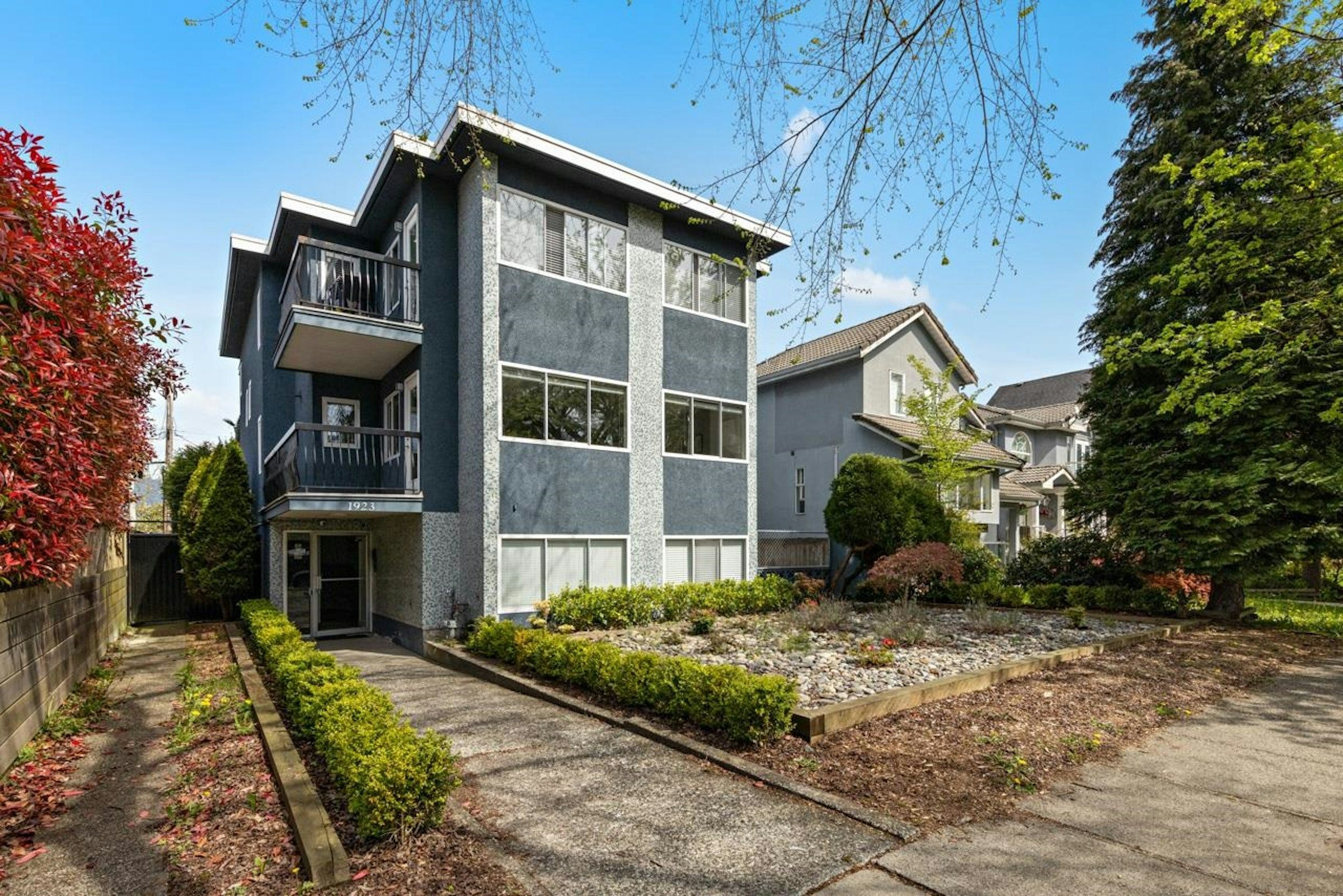
We have a couple of three-storey multiplex projects going up across the street from our townhouse complex. I think they’re great. (In fact I don’t see why our side of the street is zoned for six storeys, while the other side is zoned for multiplexes only.) But I’ve heard from quite a few of our neighbours who don’t like them, even though our own townhouse complex is also three storeys.
My sense is that after a building is built, people are fine with it. But when it’s new, people don’t like it.
Another form of sacrifice is being willing to consider modest property tax increases, as most Metro Vancouver municipalities are doing. “Taxes are the price we pay for civilization.” More tangibly, they’re also the price we pay for keeping our public infrastructure (roads and sidewalks, water and sewer pipes) and our amenities (libraries and community centres) in a state of good repair.
Ken Sim’s “zero means zero” pledge, freezing property taxes this year and next year, isn’t prudent management. After inflation, it translates into cuts in real terms. It’s like knowing that your roof is leaking and you need to replace it, but crossing your fingers and hoping it doesn’t rain.
To politicians and prospective politicians, I would point out that it’s easier to make these sacrifices when we have a sense that these sacrifices are shared. This is why it’s important for politicians to be willing to make cuts to their own pay, at a time when we’re asking people to sacrifice, and why pay increases for politicians are so corrosive. Elected officials cutting their pay isn’t going to close a budget deficit, but it still demonstrates that elected officials are willing to share the pain themselves.
Solidarity, but in both directions
By Vik Khanna · April 28, 2026
A response to Russil Wvong, OneCity council nomination candidate, whose April 28 piece "Solidarity and sacrifice" makes the case for shared sacrifice in tackling Vancouver's housing shortage.
I read Russil's piece this morning and I agree with the frame. Solidarity is the right word. Shared sacrifice is the right principle. He is also right that politicians who ask the public to absorb change should be willing to absorb it themselves — the property-tax point and the political-pay point are both well made.
I disagree with one thing, and the disagreement is structural enough to matter.
Russil's piece treats solidarity as one-directional: existing residents accept density so that newcomers can be housed. That formulation is incomplete. Solidarity is not a transfer payment from one group to another. Solidarity is integrated planning that lets the cost of growth be carried by the system, not by the families standing on the corner where the cost lands.
The reason this is not rhetorical is that the schools are full.
We built School Space Finder to make this visible. Every Vancouver dissemination area, every public school catchment, every school's current enrollment against its operating capacity. It is a free public tool. Anyone can open it.
The picture it shows is not the picture Russil's framing presumes. The framing presumes that adding a six-storey building across the street is a matter of accepting some construction noise and a changed sightline for a few months. The picture School Space Finder shows is that the school the new families will need is already over capacity. The catchment a child in that new building would walk to does not have a seat for that child. The next-closest catchment does not either. The picture extends across most of the city.
The Carleton example
Sir Guy Carleton Elementary is the clearest case. The Vancouver School Board closed Carleton in December 2025. The site sits in the Joyce-Collingwood Transit-Oriented Area — a zone where the Province of British Columbia has legislated density under Bill 47. The City of Vancouver approves the rezonings that operationalize the Provincial mandate. The families those rezonings bring need schools.
Three institutions, three jurisdictions, working on the same parcel. The Province says: build housing here, density is mandated, the law requires it. The City says: yes, we will approve the rezonings the Province has required. The School Board says: we are closing the school that serves this catchment.
This is not a hypothetical coordination gap. It is the actual sequence that has occurred at Joyce-Collingwood. Density legislated. Density approved. School removed. The families who will move into the buildings the Province mandated and the City approved will arrive to find that the local school they planned around no longer exists. The next-closest school is over capacity already.
Each institution acted within its mandate. The Province did its job. The City did its job. The School Board did its job. The system in which all three operated did not have a coordination layer.
That is the picture Russil's framing does not yet contain. The townhouse residents who do not like the new multiplex across the street are absorbing one cost. The families who move into that multiplex and discover their child cannot get into the local school are absorbing another. The school district, planning enrollment from a methodology that does not see the housing pipeline the Province requires and the City approves, is absorbing a third.
The cost is real and it is being paid. It is just being paid by the people who do not have the political voice to name it.
What integrated planning would actually require
Solidarity in Russil's frame asks the existing residents to bear the cost of change for the benefit of newcomers. Solidarity in mine asks the institutions — Province, City, School Board, and the Conseil scolaire francophone — to coordinate so that the cost of growth does not fall on the same families three times: in school space lost, in transit cost added, in housing density absorbed without coordinated school capacity.
This is not an argument against density. I am explicitly in favour of density done right. It is an argument that density without coordinated school capacity is not shared sacrifice — it is transferred sacrifice. The framework is the same; the direction is different.
This Wednesday, April 29, the Vancouver School Board votes on a $1.00 easement at Sir Sandford Fleming Elementary that hands a 99-year vehicle right across functioning school land to a private development. The development brings density. The school is already full. The site is already constrained. The two facts are not adjudicated against each other in any institutional venue, because no institutional venue exists where they would be adjudicated.
The Province legislates density. The City zones. The School Board projects enrollment. The CSF serves a Francophone population none of the other three coordinates with operationally. Each does its job. The system does not.
What this means for OneCity members reading Russil's piece
If solidarity is the principle, the test is whether the principle holds when the cost is named. Russil's piece names the cost to the existing resident watching a building go up across the street.
The harder cost — the one neither his blog nor most of the housing conversation in Vancouver currently names — is the cost to the family who has just moved into the building and cannot get their child into the school.
That cost is what School Space Finder shows. It is what the Carleton closure made literal. It is what the Fleming vote on Wednesday is one more increment of. And it is the cost the next layer of housing conversation in Vancouver will need to incorporate.
I would welcome a conversation with Russil about this. He has the right instinct. The frame extends further than his piece took it. OneCity members who are about to receive their ballots have, in him, a candidate who has demonstrated willingness to think structurally about civic responsibility. The next layer — coordinated planning across the four institutions that act on the same parcel, with the schools as a binding constraint rather than a downstream casualty — is the layer the Joyce-Collingwood sequence and his nomination are both pointing at.
The schools are full. Solidarity has to mean we plan around that fact, together, in the same room. Otherwise we are not sharing sacrifice. We are routing it.
Vik Khanna is Co-Founder and CEO of The Visual Thinking Company, a Vancouver-based civic intelligence infrastructure company. School Space Finder is a free public tool: schoolspacefinder.vtco.app. This blog post represents the personal view of the author.