The five whys
Why is housing in Metro Vancouver so scarce and expensive?

Whenever the question of why housing in Vancouver is so expensive comes up, I think of Toyota’s “five whys.” When you’re trying to identify the root cause of a problem, every time you get an answer you ask, “Why?”
Of course you’re not limited to stopping after five iterations.
Q1. Why is housing in Metro Vancouver so expensive?
Because of scarcity: high demand and low supply.
It’s pretty clear that demand is high. Vancouver’s a great place to live. Lots of people want to live and work here. It’s a popular place for people to retire.

But high demand is only one side of scarcity. The other side is low supply. Why aren’t we building a lot more homes to keep up with demand?
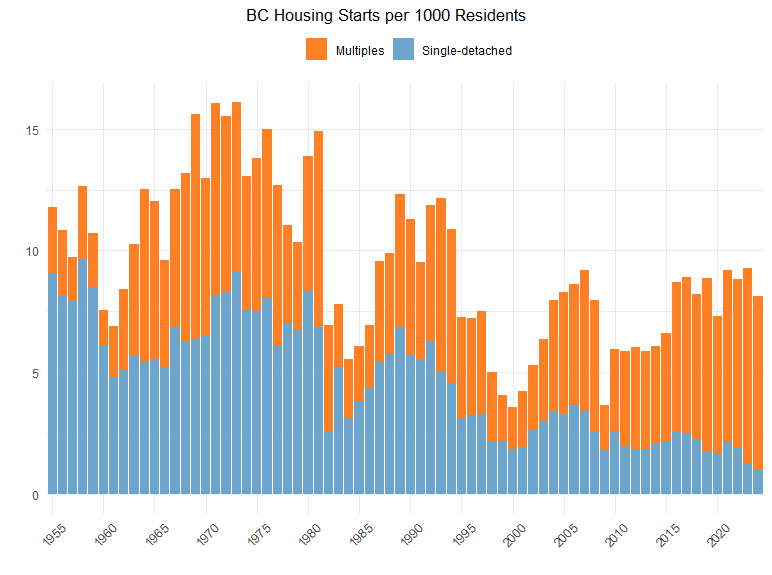
Because housing is scarce, prices and rents have to rise to unbearable levels to force people to leave, or to crowd into whatever housing they can find, or worst of all, end up homeless.
Another school of thought is that it’s caused by greed, or financialization. But then why is housing in Edmonton or Calgary so much cheaper than housing in Vancouver? Are people in Alberta less greedy?

On TikTok, the most common response is, “Who wants to live in Edmonton?” - in other words, demand is higher in Vancouver. In addition, Edmonton and Calgary have plenty of land and can sprawl outward, so supply is higher than in Vancouver.
Q2. So why aren’t we building faster?
Besides high demand, the other thing about Metro Vancouver compared to Edmonton and Calgary is that land here is limited by the ocean and the mountains, but it’s also very underused. Most of it is used for single-detached houses. We have single-detached houses and we have high-rises, and not much in between. We spend a lot of time tearing down an old single-detached house and putting up a new maxed-out single-detached house, which doesn’t add any more housing.
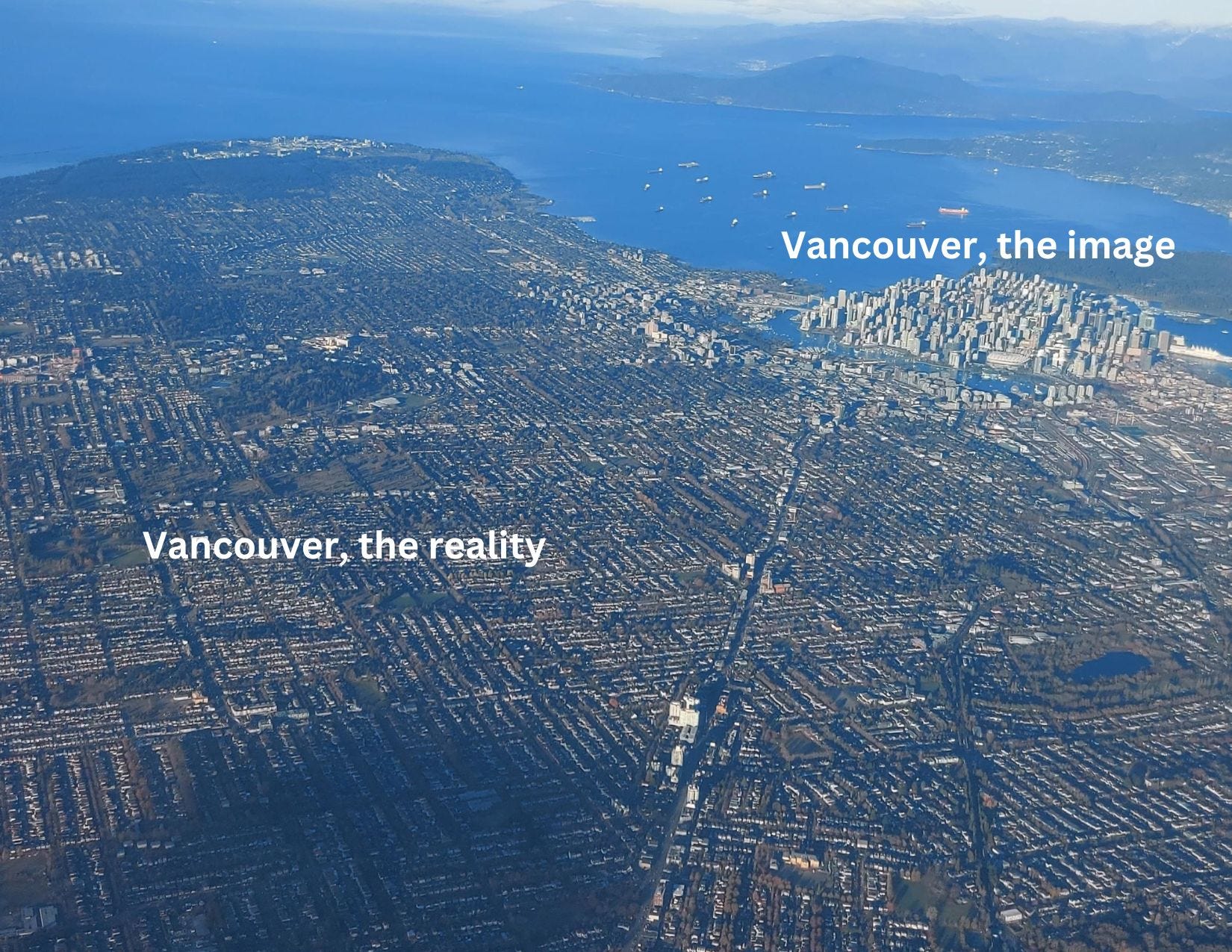
Q3. Why is most of the limited land used for single-detached houses?
Because it’s the law. Most of the land here is reserved for low-density housing. It’s illegal to build an apartment building on that land. Whenever you want to build an apartment building, even a small one, you need to get special permission through a discretionary “spot rezoning,” which is very slow and difficult. There’s a lot of micromanagement. Ginger Gosnell-Myers: “It’s easier to elect a pope than to approve a small apartment building in the city of Vancouver.”
With limited land, we need to build up instead of sprawling outward, but we’ve made it very difficult to build up.
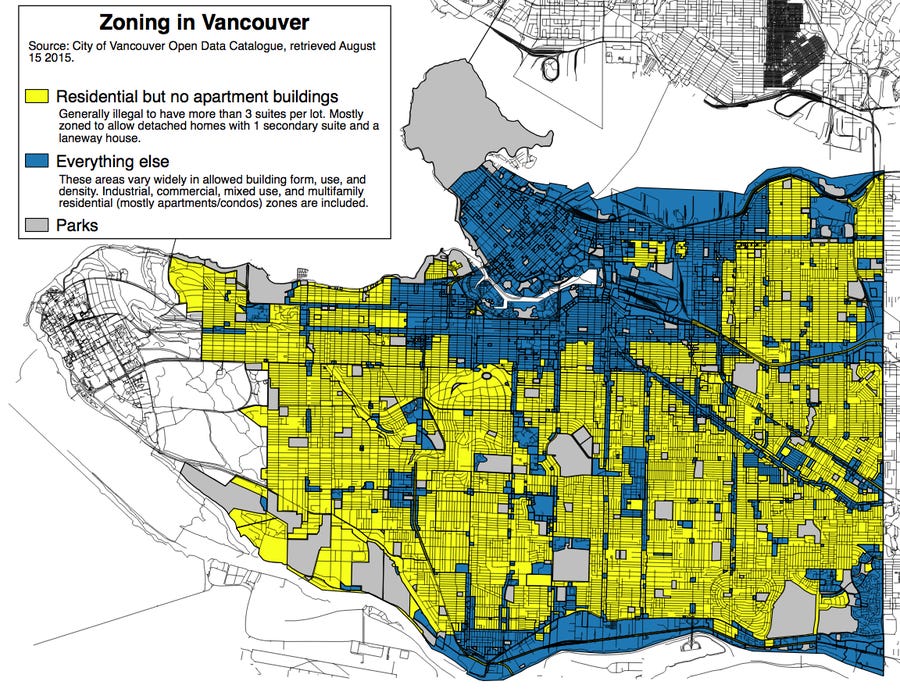
The slow and difficult approval process means that there’s massive economies of scale from going as big as possible. It doesn’t make much sense to spend eight years fighting to get approval for a small apartment building.
There’s also massive barriers to entry for smaller builders. A large builder can absorb the risk of an unexpected delay or a project being rejected entirely. A small builder can’t.
Q4. Why does the city have laws like this?
Back in the 1960s and 1970s, people in Vancouver hated the West End and they hated the handful of high-rises that were built in Kitsilano. So they made it illegal to build anything other than a single-detached house in most of Vancouver.
For details, see A Brief History of Vancouver Planning & Development Regimes, by Jens von Bergmann and Nathan Lauster, February 2023. Slides.
Q5. Why hasn’t anyone fixed this?
The 1970s were a long time ago. These days, judging by opinion polls, people seem more willing to accept apartment buildings. The spot-rezoning process is painful for the city as well as the applicant. Why does the city keep apartment buildings illegal?
It’s because the city extracts a huge amount of revenue from new housing, through the “spot rezoning” process. Over the 10 years from 2011 to 2020, the city negotiated to receive $2.5 billion in cash and in-kind benefits, in the form of supposedly-voluntary Community Amenity Contributions. It’s a way for the city to extract the maximum possible cash value out of the rezoning, allowing it to keep property taxes lower.
This means that the city’s incentives are backwards. The more scarce and expensive housing is, the more revenue the city gets. If the city were to make it legal to build more housing, they would lose out on that revenue. To quote the MacPhail Report:
CACs are negotiated in exchange for rezoning property to accommodate more homes. As a result, local governments that proactively increase zoned capacity or update zoning codes to better reflect anticipated growth and community priorities (as outlined in regional growth strategies and official community plans) lose that revenue opportunity. Indeed, local governments can generate CAC revenue by keeping zoning below levels that make redevelopment possible, and selling additional “air rights” through the zoning powers they have been delegated. Consequently, the additional costs, time, and uncertainty associated with the rezoning process—including their negative impacts on housing supply—persist.
When faced with pressure to speed things up and allow more housing, the city’s incentives are to move as slowly as possible. I think that’s a big part of the reason why Ken Sim and ABC haven’t been able to make significant changes since the 2022 election, despite winning eight out of 11 seats on city council.
Good summary Russil. Those two comments before me make sound points, and although I think there are good answers to their questions that land at the same types of policy suggestions you support, I wonder if it's worth exploring other messaging that more directly answers their types of questions. Personally, I do think OneCity campaigning on "cost of living crisis" feels a bit off-base considering how much better the cost of living has gotten in the past three years.
To address Evelyn's point, perhaps it's worth explaining how the spot rezoning process contributes to higher costs by making cost projections higher, resulting in developers attempting to build fewer projects, reducing supply, which ultimately makes prices higher than they would be with transparent development charges and land that's already zoned for apartments. And this is true even if council does approve many projects.
Regarding displacement of existing tenants, I think this deserves more attention from pro-housing folks in general. I would love a deep dive into how council is addressing this now and your take on it. I heard some people say that the Broadway plan includes provisions for this, but I'm not sure exactly how they work or if they're a good idea.
And of course to address Anthony's point it might be worth explaining apartment filtering, although I've never seen anyone do it as well as Uytae: https://www.youtube.com/watch?v=pbQAr3K57WQ
Housing is not scarce there are condos being built all over the lower mainland. We are in a situation now that not everybody can have a detached single family home that was the case up to the 1980s. There are even reports of unsold and empty condos. The problem is that the housing being built right now is unaffordable to wage earners. The era of paying top dollar for a well appointed condo hoping for a flip to a foreign buyer is over.