Deadwood regulations

There’s a joke that circulated on the Internet, in a lot of different versions, back in the 1990s. Marcy Hirsch, rec.food.cooking, May 1994:
Reading about trying to duplicate Grandma's recipe for soup or knishes or whatever reminds me of my all-time favorite joke. . . .
The new Jewish bride is making her first big dinner for her husband and tries her hand at her mother's brisket recipe, cutting off the ends of the roast the way her mother always did. Hubby thinks the meat is delicious, but says, "why did you cut off the ends - that's the best part!" She answers, "that's the way my mother always made it."
The next week, they go to her mother's house. She serves the same brisket, prepared the same way with the ends cut off. When asked why she cut off the ends, she says, "well, that's the way my mother always did it."
The next week, they go to the old bubbie's house, and she prepares the famous brisket recipe, again cutting off the ends. The young bride is sure she must be missing some vital information, so she asks her grandma why she cut off the ends. Grandma says, "Dahlink, that's the only way it will fit in the pan!"
This gets told a lot in management books, sometimes called the “Pot Roast Principle,” as an illustration of why you shouldn’t just blindly follow processes (“that’s the way we’ve always done it”) without knowing why.
Alain Bertaud observes in Order Without Design (2018) that economic conditions (like the abundance or scarcity of land) and technology (like the cost of indoor lighting) are always changing, and that therefore land use regulations always need to be revised accordingly.
The necessity of living and working in close proximity requires rules that will minimize friction. Because the economic and technological environment is changing constantly, the rules have to be constantly adapted to the new environment.
Urban planners should therefore constantly revise old land use regulations (or create new ones) to adapt them to the new economic and cultural realities of the time. Unfortunately, urban planning departments tend to prefer designing new regulations over reviewing existing ones for their relevance. As a result, a city’s land use depends on layers of regulations that often contradict one another and whose objectives have been lost with time. Digging into urban regulations is often like digging into an archeological site; one often encounters elaborate artifacts whose original purpose baffles the mind.
While nobody usually remembers the objectives of such regulations, planners and citizens assume that they were established as a result of lost wisdom and that it might be hazardous to remove them from the books.
(As a software developer, this sounds very familiar!)
Bertaud gives a specific example that sounds exactly like the pot-roast story.
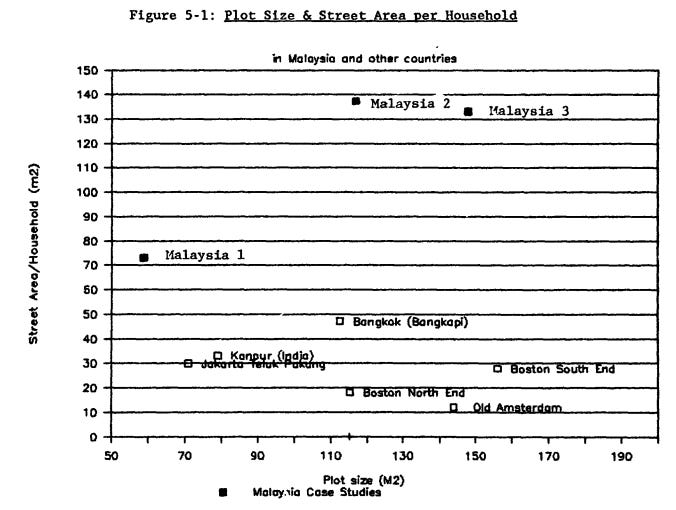
I was confronted with such a situation some years ago in Malaysia, when I was asked to find out why housing was so expensive in a country that is well endowed with developable land. I found that in residential areas, the regulations required extremely short blocks of 60 meters, resulting in an extremely high percentage of road areas that would not be normally required for horizontal housing (for example, a Manhattan block length averages about 240 meters). Additional land use regulations [setback requirements] resulted in less than 44 percent of the land being developed for residential use in a housing project in Malaysia, compared to 60–65 percent in similar projects in other countries of the region.
Nobody in the Kuala Lumpur planning office knew why blocks had to be so short, but they assumed that there must be a good reason—drainage during the monsoon perhaps?
I finally found a senior municipal engineer who told me that the practice was to locate fire hydrants at the end of a block and that the fire hose used by firemen was usually 30 meters long, hence the 60 meter length of a residential block. There was a great reluctance to change the standard, in spite of firemen using different equipment and the possibility of locating fire hydrants differently.
The cost of these regulations to the housing sector and to the environment was extremely large while bringing no real benefits to citizens. Indeed, these regulations—by requiring more land for residential development—artificially extended the area of cities into the countryside while increasing the impermeable area of the development. In a monsoon country like Malaysia, this contributed to increased water run-off during the rainy season, requiring larger drains and, at times, causing erosion.
The eventual revision of this set of land use regulations resulted in substantial savings in land development and environmental cost for the entire country.
Bertaud concludes:
The urban regulations of every city contain a number of what I would call “deadwood regulations,” regulations whose objectives have been forgotten and whose benefits can no longer be identified. It is therefore necessary to periodically audit all land use regulations to remove the ones that are obsolete and contribute to the high cost of urbanization.
More
Cost-Benefit Analysis as an Expression of Liberal Neutrality. Book chapter by Joseph Heath. See the “Imposing a regulation” section in particular. Heath discusses how to assess whether imposing a regulation is a potential Pareto improvement, making everyone better off by providing benefits which outweigh the costs. Conversely, if a deadwood regulation imposes significant costs while providing little benefit, removing it would be a Pareto improvement.