Bonsai City
Vancouver is like a bonsai tree: lovely, but much too small

TLDR: Housing in Vancouver is maddeningly scarce and expensive. This is a fixable problem. People want to live and work here; other people want to build housing for them. The problem is, we don’t let them. We’ve set up anti-growth institutions that regulate new housing like it’s a nuclear power plant, and tax it like it’s a gold mine.
(I’m accustomed to writing for the web and for Reddit, including references as hyperlinks. Inspired by Patrick Condon’s recent book Broken City, I figured I’d try writing a more linear argument.)
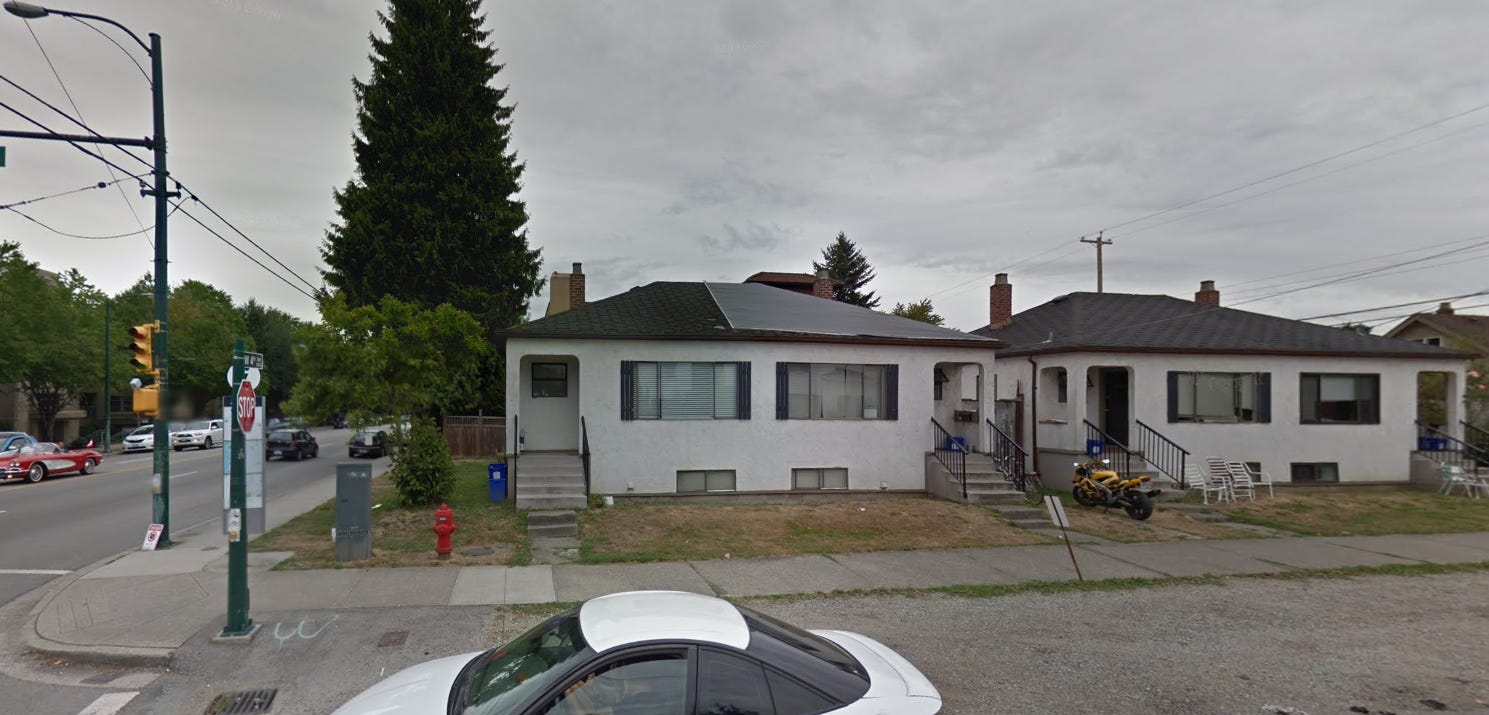
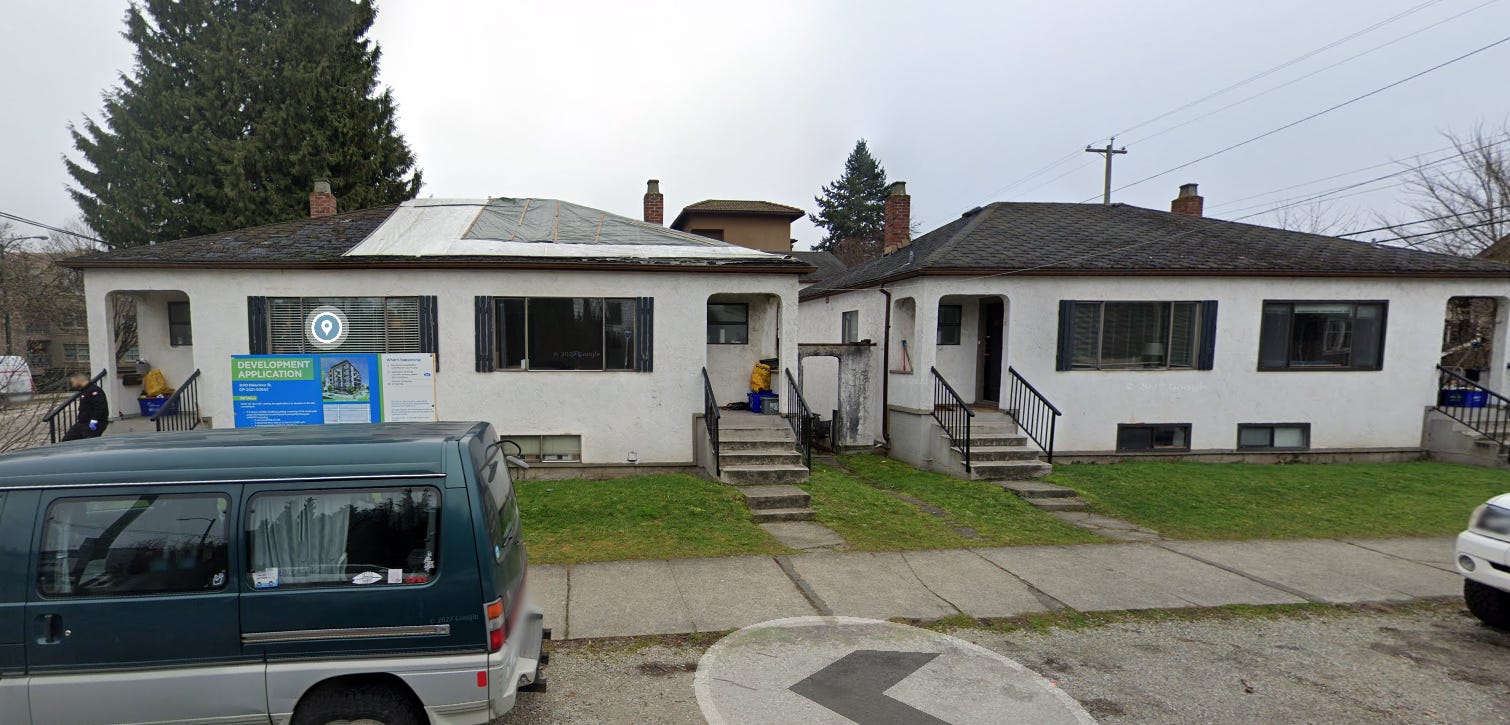
On the southeast corner of 4th and Balaclava in Kitsilano, less than 30 minutes by bus from downtown Vancouver or from UBC, there’s three old duplexes built in 1943. Twelve years ago, the owner, a retiree named Peter Miller, wanted to replace them with a six-storey rental building, with 35 apartments.
Under Vancouver’s land-use laws, what Miller wanted to do is illegal. In order to build an apartment building, you first need to go through a process called “spot rezoning,” changing the law for your one particular parcel of land. Miller spent eight years trying to convince city staff. City staff prepared a 64-page report recommending approval of the rezoning application, with more than 150 separate conditions ranging from design details (1.2c: “Provide high-quality windows with substantial mullions and deep, recessed glazing to add shadow and texture to the facades“) to edible plants (1.13e). Council held a public hearing in February 2021, receiving more than 500 letters opposing the project. The public hearing took three days, with 35 people speaking in opposition.
Ginger Gosnell-Myers summarizes: “It’s easier to elect a pope than to approve a small apartment building in the city of Vancouver.”
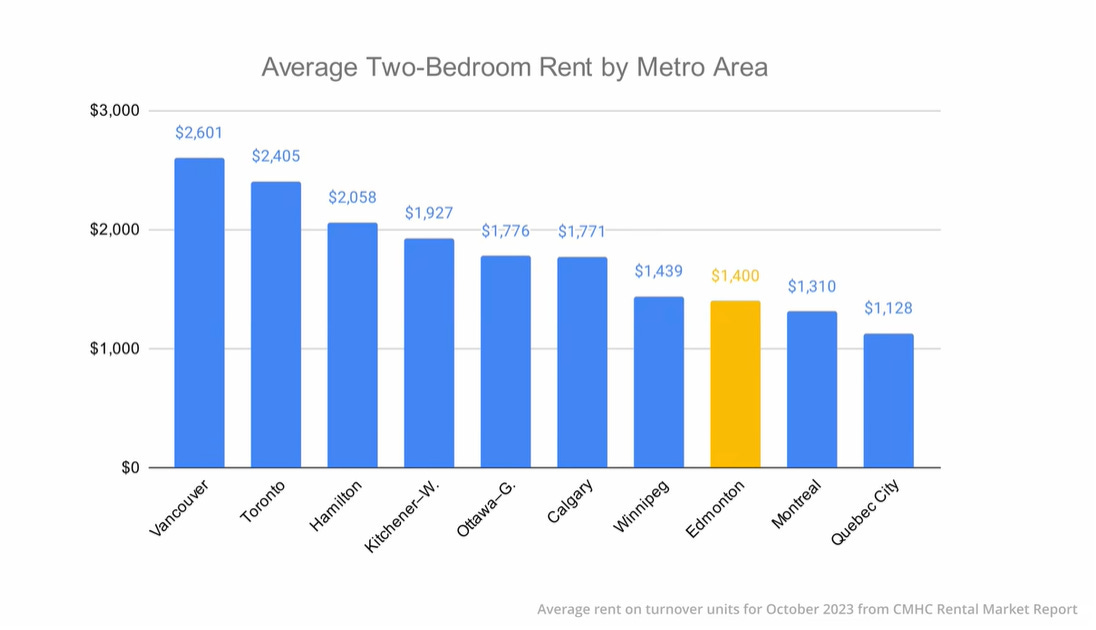
Meanwhile, in Edmonton, a developer observes: “We’re able to deliver housing in the same calendar year that we purchased the land.”
Housing in Edmonton is far more affordable than in Vancouver, despite high demand: Edmonton’s growing faster than Vancouver, and salaries are higher there. If Edmonton can do it, why can’t we?
A fixable problem
The problem in Metro Vancouver is that we have a mismatch between housing and jobs. People move where the jobs are. Vancouver’s a nice place to live, so a lot of people retire here. When somebody retires from a job in Vancouver, somebody else needs to move here to fill that job. Because we have an older population, we also need a lot of people to work in healthcare. And within the region, you’re going to have more people who want to live closer to the geographic centre with easy access to jobs.
Land in Metro Vancouver is limited, because of the ocean and the mountains. If you draw a circle with a 25-kilometer radius around downtown Vancouver, less than 40% of that circle is buildable land. So land in Vancouver is always going to be expensive. To add housing, we need to build up. But land in Vancouver is also extremely underused. There’s a lot of single-family houses where the land is worth way more than the building, but the city makes it illegal to build anything other than a new single-family house. So we spend a lot of time tearing down old houses and putting up new expensive houses that practically nobody can afford.
The result is, as people move to Vancouver for work, prices and rents have to rise to unbearable levels to push other people out. Younger people and renters are being crushed and driven out by high housing costs. The problem goes all the way to the top of the income scale - there’s people making $100,000 a year who can’t afford to stay here. It’s a bad situation even for older homeowners, who are insulated from the madness of the housing market: when younger people can’t afford to live here, the healthcare system has a hard time finding nurses and even doctors.
It’s a similar story in Toronto, or in places like California and New York City. But it’s not true everywhere. Montreal’s bigger than Vancouver, and it has cheaper housing. Edmonton’s growing faster than Vancouver, and it has cheaper housing. In the US, there’s lots of people moving from California to Texas, even though wages are lower there, because the cost of housing is so much lower.
This is a fixable problem. We have people who want to live and work here, and we have other people who want to build housing for them, like Peter Miller. The problem is, we don’t let them.
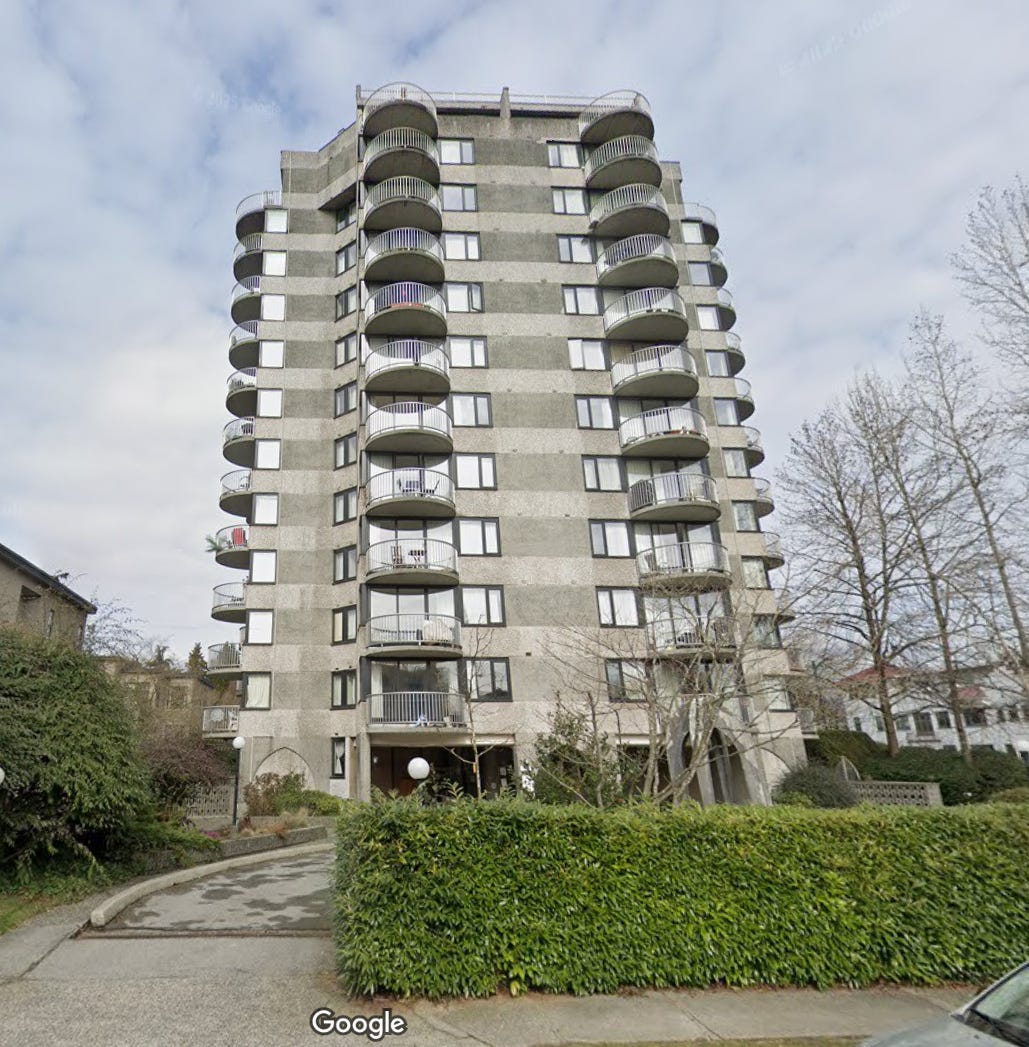
To fix Vancouver’s housing shortage, we need to build a lot more housing, both market and non-market. We don’t have as much land as Edmonton or Texas does, so we need to build up. It’s not as if we don’t know how. Elevators exist. In Kitsilano and West Point Grey, you see a handful of high-rises that were built back in the 1970s, before the city made them illegal.
Pushing down on a balloon
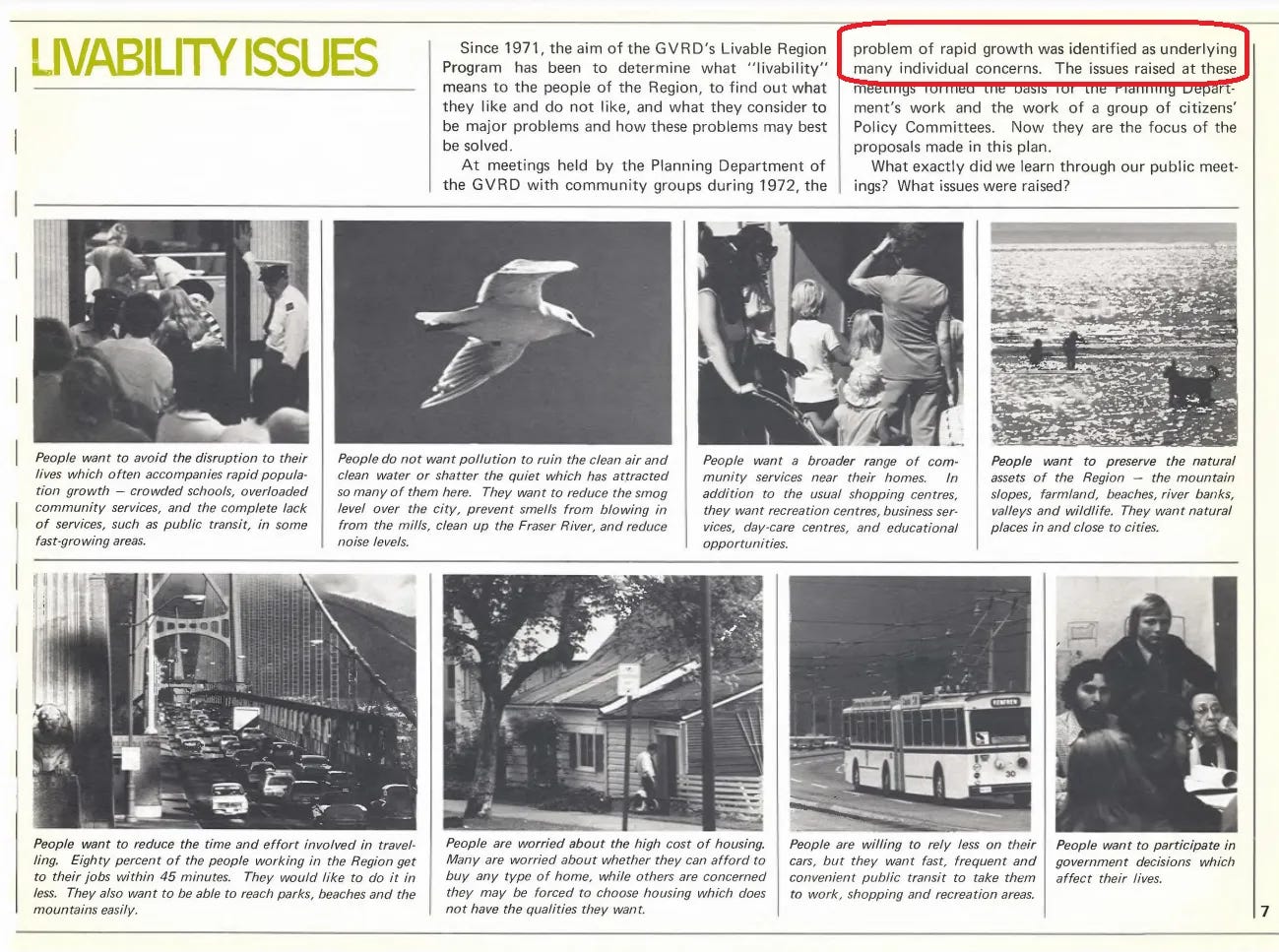
Back in the 1970s, people didn’t like the West End and they didn’t like the handful of high-rises that were going up in Kitsilano, so they made them illegal, and they set up anti-growth institutions that continue to restrict housing today.
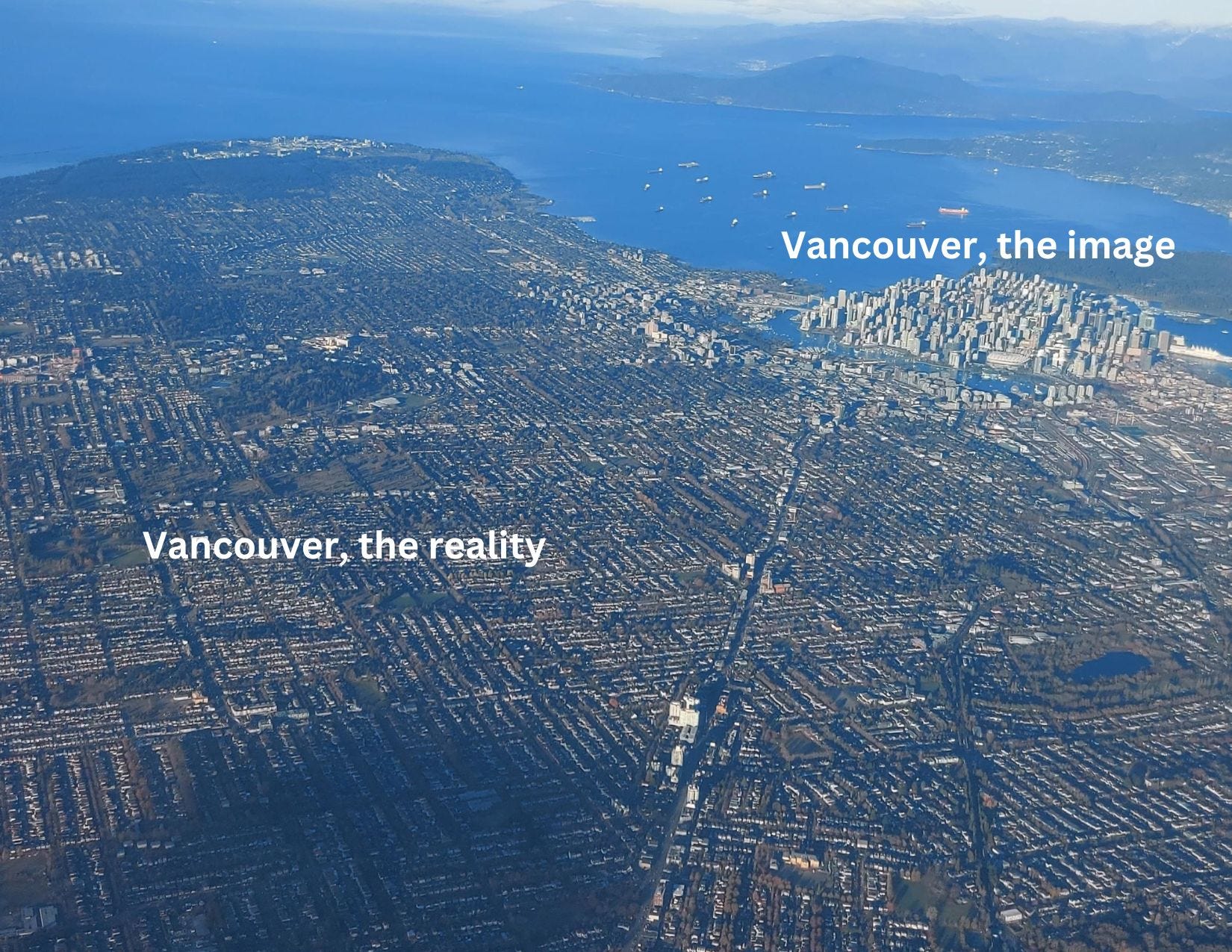
For more than a generation, the old guard of urban planners at city hall and elsewhere worked long and hard to make Vancouver what it is today. It’s like a bonsai tree: lovely, but much too small.
To paraphrase the MacPhail Report, a recent report from an expert panel headed by Joy MacPhail: we regulate new housing like it’s a nuclear power plant, and we tax it like it’s a gold mine.
Most of the residential land in the city of Vancouver is reserved for low-density housing, by law. If you want to build an apartment building, you need to notify everybody nearby, as if they’re living in the blast radius. More importantly, you need to beg the city to change the law through the spot rezoning process, which is extremely labour-intensive.
City staff must spend tremendous time and effort enforcing a massive and growing list of regulatory requirements (like edible plants), all of which are higher-priority than housing. It’s simply impossible for city hall to allow enough housing, even if they wanted to. They don’t have the manpower.
For developers, there’s giant economies of scale: it’s practically as difficult to navigate this process for a small project as for a large one.
A striking example of the restrictiveness of Vancouver’s land-use rules: the Senakw project is on a relatively small parcel of land, across the Burrard Bridge from downtown. Because it’s on Squamish reserve land, it’s not subject to the city’s zoning laws. The project is building 6000 rental apartments, 20% below-market, in the form of high-rises up to 60 storeys. The first building will be ready for occupancy in late 2025 or early 2026.
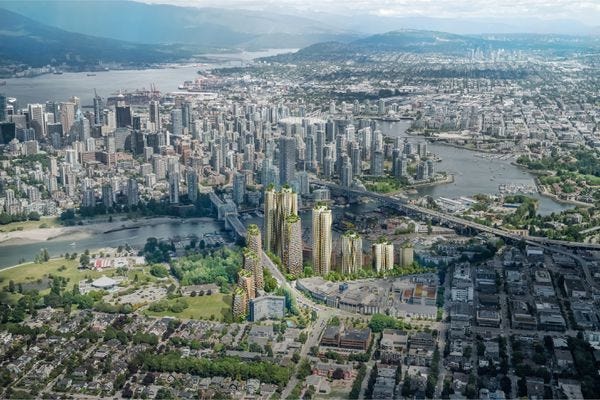
Meanwhile, if you walk five minutes north and one block west, to 1000 Cypress (in the lower left corner of the illustration), there’s a small two-storey, eight-unit rental building, built in 1972. It’s illegal to replace it with a new building of the same size: the city made apartment buildings in this area illegal. The previous owner applied to replace it with three single-detached houses, which would probably sell for about $8 million each, $6 million just for the land. That’s what the city’s laws allow you to build.
Zoning restrictions are like pushing down on a balloon. The people who want to live there don’t disappear, they get pushed somewhere else.
There's no free lunch
As the MacPhail Report points out, the city's incentives are backwards. Because housing is so scarce and expensive, they're able to extract a lot of revenue as part of the spot rezoning process, allowing them to keep property taxes low. Their incentive is to keep the zoning as restrictive as possible, so that the value of the land is discounted. And then when they change the zoning for the land to something less unreasonable, they take 70-80% of the “uplift” in value. They’re taking away your ability to build more housing on your land, and selling it back to you.
To quote the MacPhail Report:
Community Amenity Charges are negotiated in exchange for rezoning property to accommodate more homes. As a result, local governments that proactively increase zoned capacity or update zoning codes to better reflect anticipated growth and community priorities (as outlined in regional growth strategies and official community plans) lose that revenue opportunity. Indeed, local governments can generate CAC revenue by keeping zoning below levels that make redevelopment possible, and selling additional “air rights” through the zoning powers they have been delegated. Consequently, the additional costs, time, and uncertainty associated with the rezoning process—including their negative impacts on housing supply—persist.
How much revenue are we talking about? Over the 10 years from 2011 to 2020, the city of Vancouver collected $2.5 billion in cash and in-kind benefits from supposedly-voluntary Community Amenity Charges. For scale, $250 million per year was about one-sixth of the city’s operating budget.
The problem is, costs act as a floor on prices and rents. There’s no free lunch. By aiming to maximize their revenue, municipal governments are ratcheting up the floor on prices and rents. Whenever prices and rents drop below that floor, homebuilding halts until prices and rents rise again.
This affects prices and rents for existing housing as well as new housing, since they compete with each other. When new housing is scarce and expensive, existing housing will also be scarce and expensive, just as when there’s a shortage of new cars, old cars are expensive.
To be fair, it’s not just municipal development charges that are raising costs. Labour and materials are also much more expensive since Covid. In theory, municipalities could lower their development charges to counter these headwinds. But this is extremely difficult, because they’re counting on that money!
The road ahead
Since the 1970s, we've had an ambivalent attitude towards growth. Orwell talks about "Little Englanders." Similarly there seem to be a lot of "Little Vancouverites" who are politically active, who want Vancouver to stay the same and who don't want it to grow. The result is that Vancouver has become more and more exclusive and expensive.
People move where the jobs are. We need people to run the healthcare system, for example. Tech employers want to expand. And so on. Problem is, because of Vancouver's ambivalent attitude towards growth, we're reluctant to build enough housing. So we end up with a mismatch between jobs and housing. And then prices and rents have to rise to unbearable levels to keep people out.
If you have a lot of money, or if you moved here and bought a place 20 years ago, Vancouver’s a great place to live. Otherwise, even if you did everything right - you went to university and got good grades, you got a high-paying job - it’s going to be very hard to stay in Vancouver. This is why Vancouver is sometimes described as a “playground for the rich.”
Given the scarcity and cost of housing, it’s not surprising that a lot of first-time homebuyers are getting help from parents. (It’s like the return of the landed gentry: you can buy a property here if your parents have a property.) According to a survey in June, 40% of first-time homebuyers in BC needed help from family.
We basically have two choices.
We can keep Vancouver small, expensive, and exclusive, like the Arbutus Club, with high prices and rents keeping people out. Because we have a lot of high-paying jobs that need to be filled (like emergency-room nurses), this is a cost rather than a benefit.
Or we can be larger, with a wider range of people and incomes: more like Montreal than like Shaughnessy.
Because municipal incentives are backwards, municipal governments will not fix this on their own. We’ll need intervention by higher levels of government.
Peter Miller’s rezoning application was approved at the public hearing in February 2021, after an eight-year battle. Unfortunately, he died in July 2022 at the age of 85, a couple months after getting the development permit (an entirely separate process), before construction could start. The three old duplexes are still there.
More
I’d recommend that anyone interested in housing take the time to read through the MacPhail Report.
The “Bonsai Vancouver” metaphor is by Harmon Moon.
Video by Oh the Urbanity!: Edmonton is leading on housing reform.
Mario Polese has a very illuminating comparison of Montreal and Toronto.
A surprisingly gripping paper: Unwanted Housing, by Michael Manville and Paavo Monkkonen. In California and in Metro Vancouver, our municipal institutions treat new housing as an unwanted and undesirable land use.
David Schleicher’s paper Stuck!: The Law and Economics of Residential Stagnation provides more context. “Before the 1970s, land-use restrictions (zoning laws, subdivision regulations, historic preservation, and so on) limited access to some towns or communities, usually rich suburbs. They did not, however, cap housing construction in entire metropolitan regions. Builders could always construct new housing, either in downtowns or on the urban fringe. Something dramatic happened to land-use regulation in coastal metropolitan regions like San Francisco, New York, and Boston in the 1970s and 1980s: it became much, much stricter.”
Summary of major changes from the BC NDP to make more housing legal by right, particularly multiplexes and transit-oriented development: impatience is a virtue. The path of least resistance on replacing municipal development charges.
What about non-market housing? It’ll help, but we need much more market housing to meet the scale of the shortage.
The 4th and Balaclava public hearing: agenda, with referral report, public comments, and video. Comments by Christine Boyle, WeLoveKits (which fought the rezoning application for two years), and the Upper Kitsilano Residents Association (which was also opposed).