2012 Mayor’s Task Force on Affordable Housing
It takes a long time to build non-market housing

Final Report from the Mayor’s Task Force on Housing Affordability: Bold Ideas Towards an Affordable City. September 2012. The task force was co-chaired by Gregor Robertson and Olga Illich.
I found it interesting to read through this report, from 13 years ago, and look back to see how things turned out. The top-level recommendations are to increase supply and streamline approvals (recommendations 1 and 4), and to increase and preserve non-market housing (recommendations 2 and 3).
Task Force Recommendation 1: Increase supply and diversity of affordable housing
Density increases in appropriate locations create important opportunities to enhance housing affordability and diversity. The City should accelerate planning programs that increase density in large developments (e.g. Marine Gateway, South East False Creek, Final Report from Mayor’s Task Force on Housing Affordability - 9762 4 East Fraser Lands) and transit oriented locations, and those that increase housing diversity in residential neighbourhoods, including the creative use of underutilized city land, such as streets. Improving housing affordability and diversity should be a primary focus of these planning initiatives.
Task Force Recommendation 2: Enhance the City’s and the community’s capacity to deliver affordable rental housing and social housing
Create a new City-owned entity to deliver affordable rental and social housing by using City lands. Mobilize the community to support affordable housing through community land trusts and alternative financing models.
Task Force Recommendation 3: Protect existing social and affordable rental and explore opportunities to renew and expand the stock
Protect existing non-profit, social and co-operative housing that may be under threat and continue to protect the affordable market rental stock using the community planning process to focus on strategies to repair, renew and expand the stock neighbourhood by neighbourhood.
Task Force Recommendation 4: Streamline and create more certainty and clarity in the regulatory process, and improve public engagement
Enhance certainty, efficiency and transparency of approval processes and clarify regulations in order to reduce development costs and enhance affordability.
City staff recommended prioritizing six immediate actions:
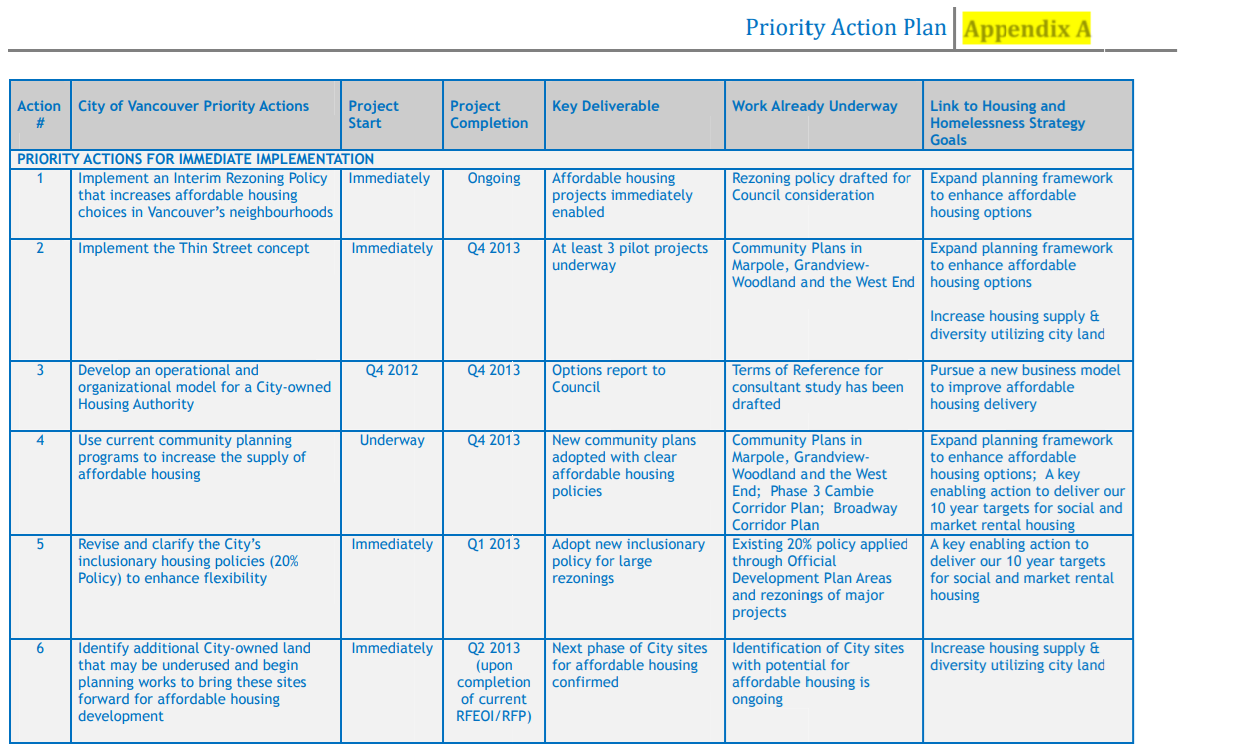
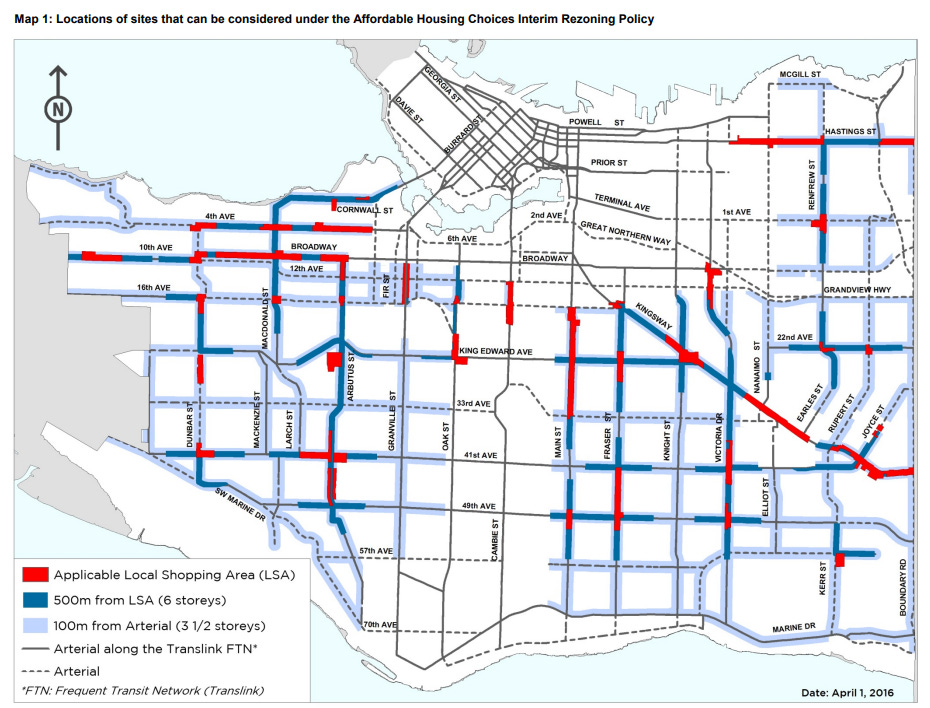
Action 1 became the Interim Rezoning Policy for Affordable Housing Choices, effective from 2012 until 2019. It was eventually replaced with the Secured Rental Policy, which is around the time I got involved in local housing politics.
[Correction: earlier I thought that it took until 2018 before Action 6 resulted in an agreement, but I didn’t look hard enough! Earlier, there was an April 2013 agreement to build 360 affordable rental homes on four parcels of city-owned land, leased for 99 years to the Vancouver Community Land Trust Foundation. Press release.
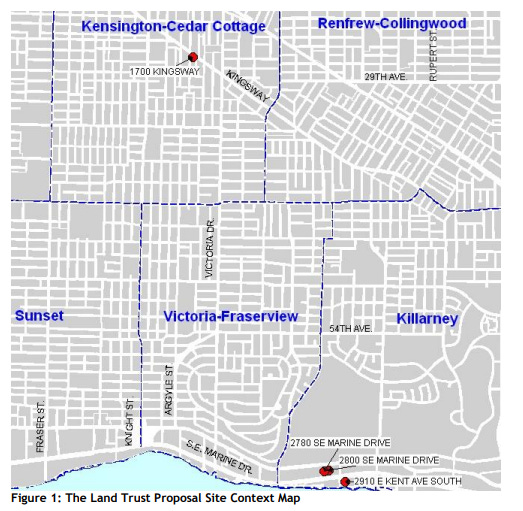
The four sites:
1700 Kingsway (Cedar Cottage) - completed in 2017
Fraserview co-op (River District), on two of the parcels - completed in 2018
Kinship co-op (River District).]
There was a subsequent announcement in spring 2018 that the city was providing seven city-owned sites to the Community Land Trust to build new co-ops, aimed at middle-income households, with a total of 1000 new homes. It looks like this announcement included the Kinship co-op.
Vancouver announces big non-market housing project. Susan Lazaruk, Vancouver Sun, May 2018.
Three of seven Vancouver co-op housing projects “stuck” waiting for provincial, federal funds five years later. Susan Lazaruk, Vancouver Sun, December 2022.
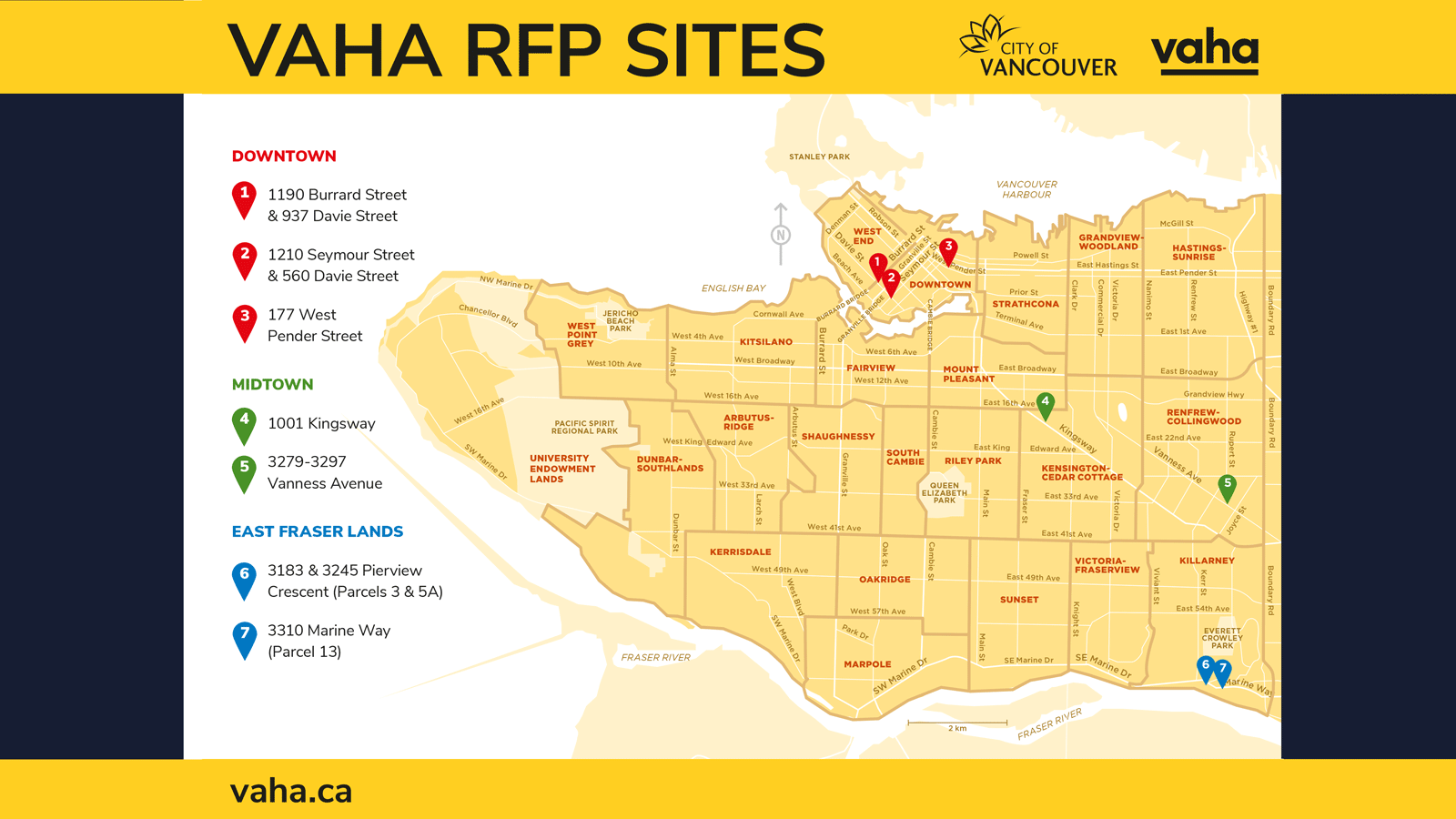
Sawmill (River District) - completed
5085 McHardy (near Joyce Station) - completed
1001 Kingsway (Cedar Cottage) - this one still looks stuck. Rezoning website.
177 West Pender (Downtown East Side) - under construction
Seymour and Davie (Downtown) - under construction
Davie and Burrard (Downtown) - under construction
More
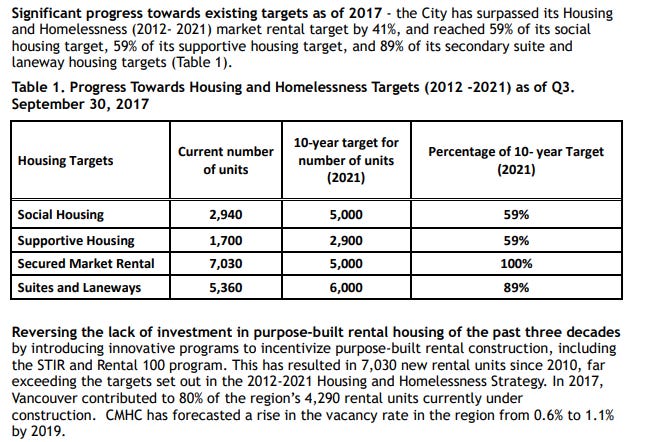
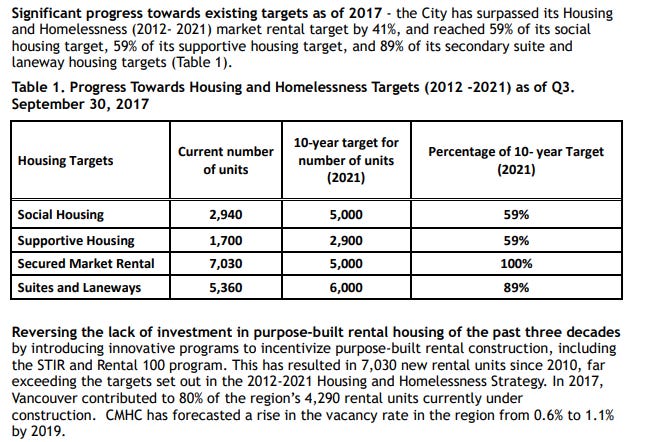
In the same timeframe, in July 2011, council approved the Housing and Homelessness Strategy 2012-2021. A subsequent report in November 2017 observed that the market rental part of the strategy had been quite successful, exceeding the 2011 targets by 40%.
For more on STIR and Rental 100, see the city’s policies on rental housing. Creating and protecting purpose-built rental housing.